.svg)
%201%201.svg)
Nextgen Diesel Inc.
Why Overheating Is One of the Fastest Ways to Damage a Diesel Engine
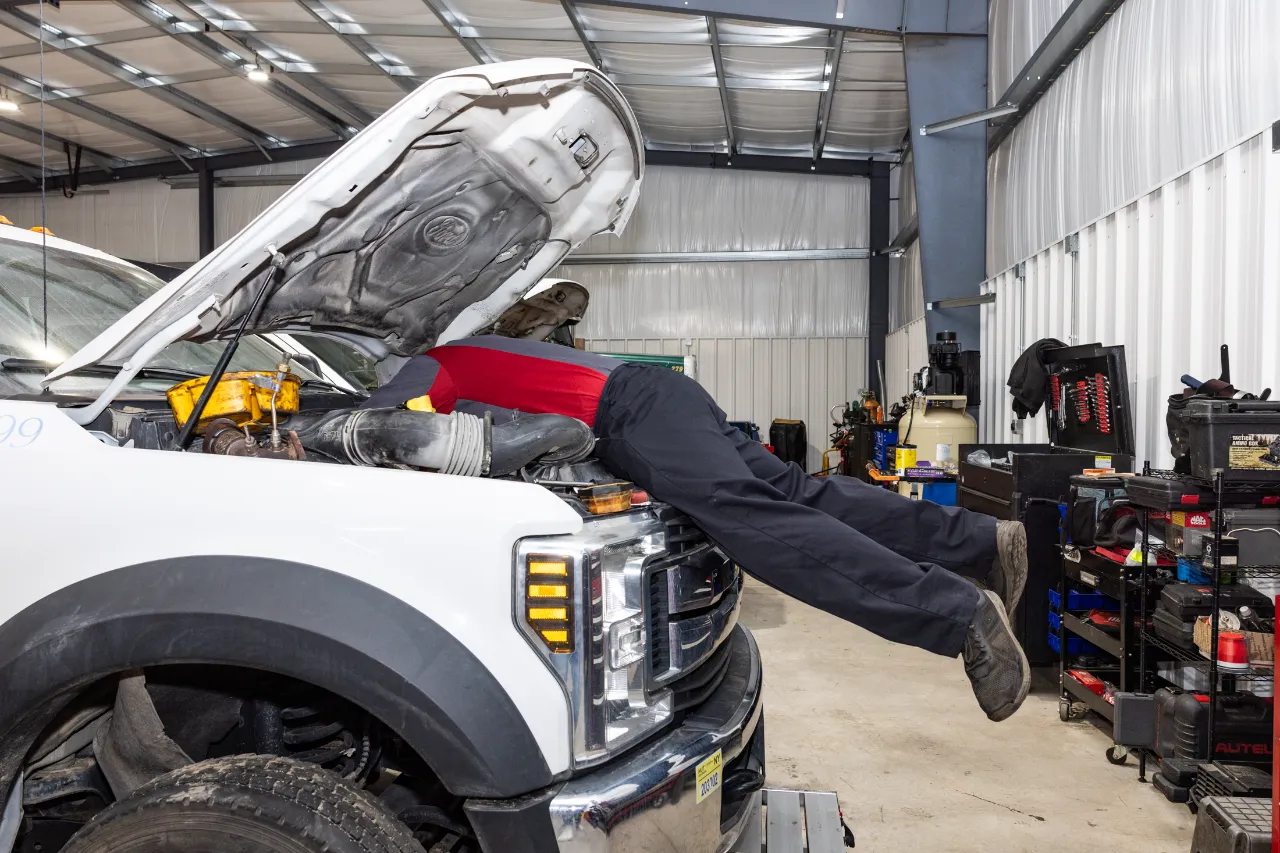
Diesel engine overheating can turn a routine day into a major repair due to high compression, heavy loads, and heat. When the cooling system fails, components expand, lubricants lose effectiveness, and seals can break. For Denver truck owners and fleet managers, risks rise in summer, during long idling periods, on steep grades, or on loaded routes. A temperature warning is a critical sign that the engine, cooling, oil, or airflow systems are failing.
How A Diesel Engine Controls Heat
A diesel engine produces heat during combustion and cools it via a cooling system: coolant circulates through the engine to absorb heat and transfer it to the radiator, where airflow dissipates it. The water pump moves coolant, the thermostat controls flow by temperature, and the cooling fan and clutch boost airflow at low speeds or idle when natural airflow is insufficient.
Engine oil helps control temperature, primarily by lubricating but also by carrying heat away from bearings, pistons, and other moving parts. Heavy-duty engines often use oil coolers to reduce temperature before oil returns to vital components. Overheated or contaminated oil may fail to protect bearings and journals.
Why Excessive Heat Causes Damage Quickly
Diesel engines need precise tolerances. Pistons, rings, liners, bearings, valves, and heads must stay within narrow limits. Excessive heat causes metal to expand, oil to thin, gaskets to weaken, and seals to become less reliable.
A diesel engine overheating can cause rapid damage, affecting the entire engine rather than a single part. Continued operation while overheated increases the risk of head gasket failure, warped surfaces, scored cylinder walls, and bearing damage.
High temperatures can place serious stress on truck engine cooling systems, especially during hot-weather operation. Coolant quality also matters because proper coolant helps protect against boiling, freezing, and component damage.
Common Causes Of Diesel Engine Overheating
Most overheating issues stem from a cooling system failure, poor airflow, low fluid level, or mechanical restrictions. Diagnosing the exact cause is crucial, but common issues in heavy-duty diesel engines include:
- Low coolant due to leaks, poor maintenance, or a faulty pressure cap
- Restricted airflow through a dirty or clogged radiator
- A weak or leaking water pump
- A stuck thermostat or temperature regulator
- A failing fan clutch or cooling fan issue
- Collapsed hoses or restricted coolant passages
- Poor coolant condition or an incorrect coolant mixture
- Exhaust gas entering the cooling system through a gasket or cylinder head problem
Guidance for coolant loss includes inspecting hoses, drain fittings, coolant manifolds, thermostat housings, radiator cores, cylinder head gaskets, water pump seals, and pressure caps when coolant loss is suspected.
What Parts Are Most At Risk?
Overheating typically affects the weakest points first. Rubber hoses, seals, and gaskets may harden, swell, crack, or leak. If coolant loss continues, the engine runs even hotter, creating a cycle of worsening damage.
The cylinder head is vital to protect. Excessive heat can distort or crack it, leading to internal coolant loss, pressure issues, or symptoms such as white smoke, rough running, bubbling, or unexplained coolant loss.
The head gasket is vulnerable, sealing combustion, coolant, and oil passages. Overheating can weaken it, causing failure. When coolant and oil mix, it risks bearings and other parts.
Pistons, rings, and liners are also at risk. Excessive heat can increase wear, reduce compression, and contribute to blow-by. Bearings may suffer when oil becomes too hot or contaminated. If bearing surfaces lose proper lubrication, damage to the crankshaft and connecting rod may follow.
Warning Signs You Should Not Ignore
A diesel engine shows early signs before serious damage. Address these signs quickly, especially if the truck hauls, towing, or does stop-and-go work. Watch for:
- Rising temperature gauge reading
- Steam or coolant odor
- Coolant puddles under the truck
- Repeated need to top off coolant
- White exhaust smoke
- Engine derate or power loss
- Poor heater performance
- Oil that appears milky or contaminated
- Bubbling in the coolant reservoir
- Overheating only while idling or under load
An idle-overheating truck may have airflow or fan problems. Overheating under load could indicate coolant flow issues, a blocked radiator, a weak pump, gas intrusion, or an oil cooler problem. Continuing to run can increase repair costs.
Why Overheating Can Lead To An In-Frame Rebuild
An in-frame rebuild may be necessary if overheating damages internal engine parts, but repairs can often be done without removing the engine. Severe overheating can harm pistons, rings, liners, bearings, gaskets, and sealing surfaces.
This often starts with a manageable cooling system issue, like a small leak, weak water pump, restricted radiator, or failing fan clutch. Repeated hot operation can lower oil protection, damage cylinder seals, and increase internal wear.
When the engine shows low compression, heavy blow-by, coolant contamination, or bearing damage, minor repairs may be insufficient. An in-frame rebuild might be necessary to restore compression, oil control, and reliability.
Preventive Maintenance Reduces Overheating Risk
Strong preventive maintenance effectively reduces the risk of overheating. Heavy-duty trucks face demanding conditions, so coolant inspections shouldn't be infrequent. Practical steps include:
- Check the coolant level when the engine is cool
- Inspect hoses, clamps, tanks, and fittings for leaks
- Keep the radiator and cooling stack free of debris
- Test the pressure cap if coolant loss is suspected
- Replace coolant at the proper service interval
- Confirm fan clutch operation before hot-weather hauling
- Inspect belts driving cooling system components
- Check the engine oil condition after any overheating event
Scheduled maintenance should include cooling system inspections before summer or heavy hauling. Follow manufacturer-recommended procedures and scheduled checks at the required intervals.
Protect Your Engine Before Heat Takes Control
Overheating a diesel engine damages heavy-duty engines by affecting lubrication, sealing, coolant flow, and internal clearances. Causes include low coolant, poor airflow, radiator issues, fan clutch failure, water pump problems, and neglect. If your truck runs hot in Denver, NC, or nearby, address it promptly to prevent internal damage. Nextgen Diesel Inc. offers repairs, diagnostics, and guidance for dependable truck operation.
Next Gen Diesel offers professional diesel mechanics and our heavy-duty truck repair shop in Denver, North Carolina. We provide service for light to heavy-duty diesel vehicles, trailers, heavy equipment, & commercial fleets, both in-shop, & via a 30-mile mobile service radius that includes service to Charlotte, Gastonia, Kannapolis, Mooresville, Hickory, Statesville, & more.